


Of course! Here is a comprehensive English introduction to Beijing's top tourist attractions, designed to be informative and easy for international visitors to understand.
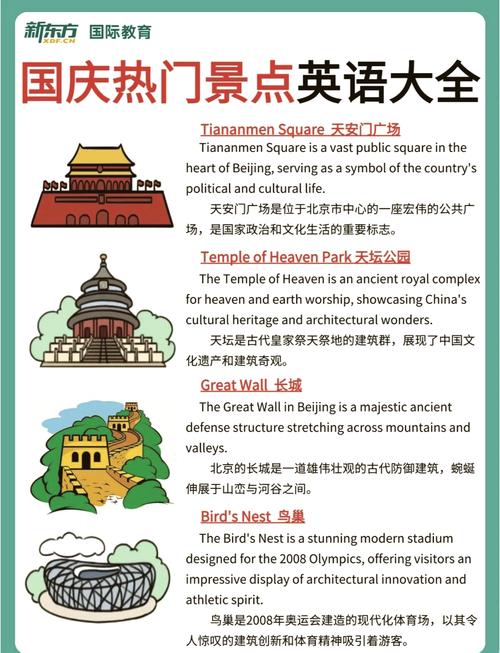
A Guide to Beijing's Top Tourist Attractions
Welcome to Beijing, the magnificent capital of China, a city where a 3,000-year history seamlessly blends with a futuristic, dynamic present. From awe-inspiring ancient wonders to vibrant cultural hubs, Beijing offers an unforgettable travel experience. Here are some of its must-see attractions.
The Great Wall of China (长城 - Chángchéng)
Introduction: No trip to Beijing is complete without visiting the Great Wall. This monumental feat of engineering is the longest wall in the world and one of the New Seven Wonders of the World. It snakes across mountains, deserts, and grasslands, a testament to ancient China's power and ingenuity.
Key Sections to Visit:
-
Mutianyu (慕田峪):
 (图片来源网络,侵删)
- Why go? Famous for its stunning, well-preserved architecture and beautiful scenery. It's less crowded than Badaling and offers a more serene experience.
- Highlights: You can hike, take a cable car up, or even take a thrilling luge (toboggan) ride down.
- Best for: Families, photographers, and those seeking a more relaxed visit.
-
Badaling (八达岭):
- Why go? This is the most famous and fully restored section of the Great Wall. It was the first section opened to the public and is easily accessible from Beijing.
- Highlights: Features a wide, paved walkway, making it suitable for all ages. It has excellent facilities and is the most popular choice.
- Best for: First-time visitors, those with limited mobility, and history buffs.
-
Jinshanling (金山岭):
- Why go? For the adventurous hiker. This section is known for its rugged, wild beauty and original watchtowers. It offers some of the most spectacular and photogenic views.
- Highlights: You can hike a 5-10 km stretch from Jinshanling to Simatai (which is currently closed, but the hike to the Gubeikou area is still popular).
- Best for: Experienced hikers and photographers looking for a challenge.
Practical Tips:
- Wear comfortable shoes for walking on steep, uneven steps.
- Visit early in the morning to avoid large tour groups and the midday heat.
- Bring water, sunscreen, and a hat.
The Forbidden City (故宫 - Gùgōng)
Introduction: Also known as the Palace Museum, the Forbidden City was the imperial palace for 24 emperors during the Ming and Qing dynasties (1420-1912). As the world's largest and best-preserved wooden structure complex, it is a masterpiece of Chinese architecture and a symbol of imperial power.
Highlights:
- The Meridian Gate (午门): The grand southern entrance, where emperors announced important decrees.
- Hall of Supreme Harmony (太和殿): The most important hall, used for grand ceremonies like coronations and imperial weddings.
- Hall of Central Harmony (中和殿): Where the emperor rested before ceremonies.
- Hall of Preserving Harmony (保和殿): Used for banquets and the final stage of the imperial examinations.
- The Imperial Garden (御花园): A beautiful, tranquil space with pavilions, ancient trees, and rockeries, offering a peaceful contrast to the formal courtyards.
Practical Tips:
- Allow at least half a day to explore. It's enormous!
- Buy your tickets online in advance to avoid long queues.
- Audio guides are available in multiple languages and highly recommended.
Tiananmen Square (天安门广场 - Tiān'ānmén Guǎngchǎng)
Introduction: Located just south of the Forbidden City, Tiananmen Square is the world's largest public square. It is a place of immense historical and political significance in modern China. It's vast, open, and surrounded by important national buildings.
Key Landmarks around the Square:
- Monument to the People's Heroes: A tall obelisk honoring revolutionary martyrs.
- Mausoleum of Mao Zedong: The final resting place of the founder of the People's Republic of China (Note: There are strict rules for entry, such as no bags).
- The Great Hall of the People: China's parliament building.
- National Museum of China: Houses a vast collection of Chinese art and historical artifacts.
Practical Tips:
- The square is open 24/7, but the buildings have specific hours.
- Be prepared for security checks before entering the square.
Summer Palace (颐和园 - Yíhéyuán)
Introduction: A masterpiece of Chinese landscape garden design, the Summer Palace was a royal retreat for emperors to escape the summer heat in Beijing. It is celebrated for its harmonious integration of natural scenery and artificial features.
Highlights:
- Kunming Lake: A huge man-made lake covering three-quarters of the palace grounds. You can take a boat ride or stroll along the famous Marble Boat.
- Long Corridor (长廊): A covered walkway stretching over 700 meters, featuring more than 14,000 traditional paintings on its beams and ceilings.
- The Tower of Buddhist Incense (佛香阁): A grand three-story tower perched on Longevity Hill, offering panoramic views of the entire palace and lake.
- Seventeen-Arch Bridge: A beautiful stone bridge leading to a small island in the lake.
Practical Tips:
- Wear comfortable shoes as there is a lot of walking and some climbing.
- It's a great place to visit for a full day or a relaxing half-day.
Temple of Heaven (天坛 - Tiāntán)
Introduction: The Temple of Heaven is a complex of religious buildings where emperors of the Ming and Qing dynasties performed annual ceremonies to pray for good harvests. It is a superb example of religious architecture and a symbol of the relationship between heaven and earth.
Highlights:
- The Hall of Prayer for Good Harvests (祈年殿): The iconic triple-gabled circular hall, built entirely without nails, is a masterpiece of Ming Dynasty architecture.
- The Imperial Vault of Heaven (皇穹宇): A smaller, circular building that housed the spirit tablets used in the ceremonies.
- The Echo Wall (回音壁): A circular wall that is famous for its acoustic properties—whispering at one end can be heard clearly at the other.
Practical Tips:
- Visit early in the morning to see locals practicing tai chi, dancing, and playing traditional instruments.
- It's a beautiful park to walk through, even if you're not focusing on the main structures.
Traditional Hutongs (胡同 - Hútòng)
Introduction: Hutongs are ancient, narrow alleyways that form the heart of old Beijing. They are like living museums, offering a glimpse into the traditional lifestyle of the city's residents. Exploring them is like stepping back in time.
Highlights:
- Nanluoguxiang (南锣鼓巷): The most famous and commercialized hutong, lined with trendy boutiques, cafes, and snack stalls. Great for shopping and people-watching.
- Qianmen (前门): A historic area south of Tiananmen Square, with restored traditional architecture and a mix of old and new shops.
- Beihai Park (北海公园): A beautiful imperial park located next to the Forbidden City. You can take a rickshaw ride through the surrounding hutongs for a more authentic experience.
Practical Tips:
- The best way to explore is on foot or by renting a bicycle.
- Get lost and wander down the smaller, less-trodden alleys to discover hidden courtyards (siheyuan) and local life.
798 Art District (798艺术区 - Qījiǔbā Yìshù Qū)
Introduction: For a completely different side of Beijing, visit the 798 Art District. This area is a hub for contemporary art, housed in decommissioned military factory buildings from the 1950s. It's a striking example of Beijing's modern, creative energy.
Highlights:
- Galleries and Museums: Home to hundreds of galleries, art centers, and design shops showcasing both Chinese and international artists.
- Street Art: The walls, buildings, and alleys are covered in vibrant graffiti and murals.
- Unique Architecture: The Bauhaus-style factory buildings create a unique and atmospheric backdrop.
Practical Tips:
- Perfect for a half-day visit. It's a great place to spend a rainy day.
- Many cafes and restaurants offer a cool, artistic vibe.
Quick Tips for Your Beijing Trip:
- Transportation: The Beijing Subway is extensive, clean, and efficient, with signs in both Chinese and English. Taxis and ride-hailing apps (like Didi) are also widely available.
- Food: Don't leave without trying Peking Duck (北京烤鸭), dumplings (饺子), and noodles (面条). Hotpot (火锅) is also a must-try social dining experience.
- Best Time to Visit: Spring (April-May) and Autumn (September-October) offer the most pleasant weather. Summer can be hot and humid, while winter is cold but can be beautiful with snow on the Great Wall.
- Language: While English is not widely spoken outside of major hotels and tourist sites, learning a few basic Mandarin phrases can be very helpful. The translation apps on your phone are also incredibly useful.
Enjoy your incredible journey to Beijing!